
What Makes a High-Quality Summer Design Program for Kids
Beyond activities: how real design experiences support creativity, skill, and growth
This reflection focuses on studio-based, materially grounded design education—an approach in which students work with physical materials, real constraints, and extended time. Here, design is learned through making, building, and bringing ideas into form, rather than through brief or activity-based projects.
For families considering summer programs, understanding this distinction matters. When searching for a high-quality summer design program for kids, families often encounter a wide range of options that look similar on the surface, yet differ significantly in how deeply they support creativity, skill development, and meaningful growth.
Design education takes many forms. What distinguishes a truly meaningful design learning experience—especially for young people—is not the category of output, but how learning is structured: whether students are guided to explore ideas over time, wrestle with constraints, and develop confidence through real design experiences rather than simply completing activities.
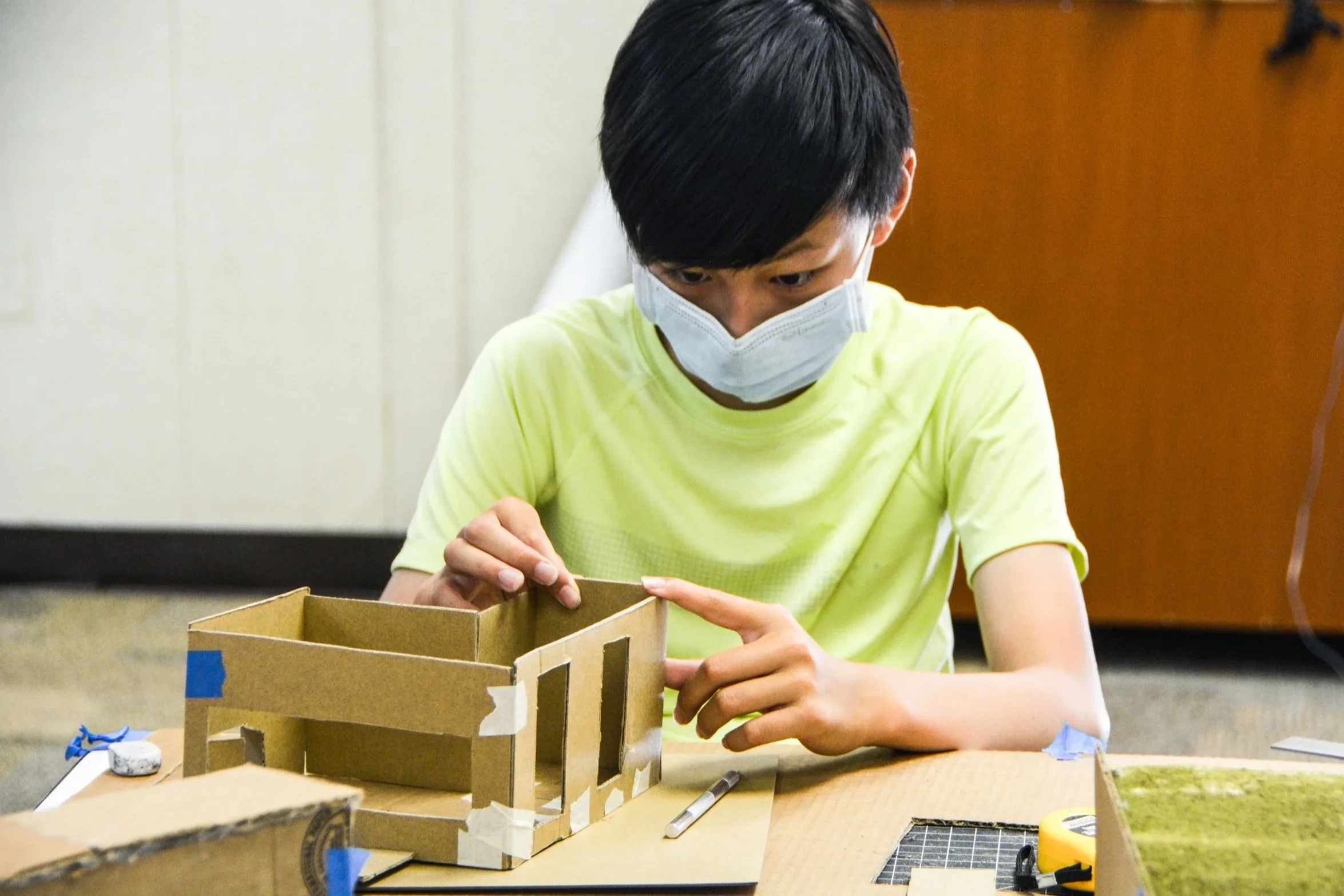
Working with real materials and real constraints in architecture summer studios at DesignX
Design Is Learned Through Making
In studio-based design education, learning happens through direct engagement with materials. Students cut, sew, nail, glue, assemble, build, prototype, and revise — encountering structure, resistance, and possibility through their hands.
High-quality programs emphasize:
real materials and tools
open-ended design problems
processes that allow ideas to evolve through testing and revision
Design is experienced not only as an idea or image, but as form, function, and construction coming together.
Constraints Give Design Its Meaning
Constraints are central to design learning. Material limits, proportion, fit, balance, durability, and structure shape every decision.
Strong programs introduce constraints intentionally, helping students learn how to make thoughtful choices, adapt ideas when conditions change, and understand the trade-offs inherent in design. Constraints do not restrict creativity; they give it direction.
Time Enables Depth
Design learning requires time — not only to produce work, but to understand it.
Extended studio time allows students to encounter difficulty, reconsider early decisions, refine details, and complete work with care.
Time allows design to move beyond activity and into learning.
Critique Is Central to the Process
In design practice, critique is essential. In studio-based learning, it is introduced as a constructive and ongoing part of the process.
High-quality programs teach students to articulate design intent, observe work thoughtfully, and revise in response to feedback. This builds clarity, resilience, and confidence — skills that extend well beyond any single project.
Completion Matters
Finishing work matters.
Completing a garment, object, toy, or architectural model teaches students that design is not only about ideas, but about seeing ideas through. Craftsmanship, precision, and care in execution are habits developed through completion.
Studio Culture Shapes Learning
Studio learning is collaborative and visible. Students work alongside one another, observe different approaches to shared problems, and learn through conversation and critique.
This culture supports focus, patience, and curiosity — qualities essential to sustained creative work.
Choosing a Program Thoughtfully
Every child is different, and no single approach fits all learners. Families seeking a summer experience grounded in material exploration, spatial thinking, and iterative making may find it helpful to look beyond surface descriptions.
Questions worth asking include:
Do students work with real materials and tools?
Are ideas brought to finished form?
Do projects develop over time?
Are critiques encouraged and supported?
The answers reveal the depth of learning being offered.
How This Philosophy Is Practiced at DesignX
At DesignX, design is taught as a material, studio-based practice, shaped by real constraints, extended time, and thoughtful critique. Through fashion, product, toy, and architectural design studios, students learn to think through materials, structure, and form — developing both technical skill and creative judgment.
We share this perspective to clarify what quality looks like in this form of design education, and to support families in making informed, considered choices.